


Postcards vs. Letters: When to Use Each in Your Direct Mail Campaign

When it comes to direct mail, most people ask the wrong question:
“Should I use postcards or letters?”
The real answer? It depends on what you’re trying to accomplish.
A postcard is seen.
A letter is opened, read, and felt.
That difference shapes everything! From how often you send your mail to the type of leads you generate.
Postcard Direct Mail Use Cases
Postcards are best for speed, visibility, and repetition.
They’re one of the most efficient ways to reach a broad audience, making them ideal when your goal is consistent exposure across a market.

Building Awareness
If someone doesn’t know who you are yet, your job isn’t to convince them to work with you, it’s to become familiar. Postcards work for this because they’re seen in seconds and can be sent frequently without overwhelming the receiver.
Plus, using customized designs on your postcards are an effective way to create immediate brand recognition.
Marketing to Broad Lists, More Frequently
Postcards really shine when you’re targeting larger, more general audiences. Because postcards are more cost-effective, they allow you to reach larger lists and stay in front of those audiences without overwhelming them. In most markets, frequency is the real driver of results and postcards make that possible.
This is where asset-specific postcards are especially effective as they let you match your message to the property type!
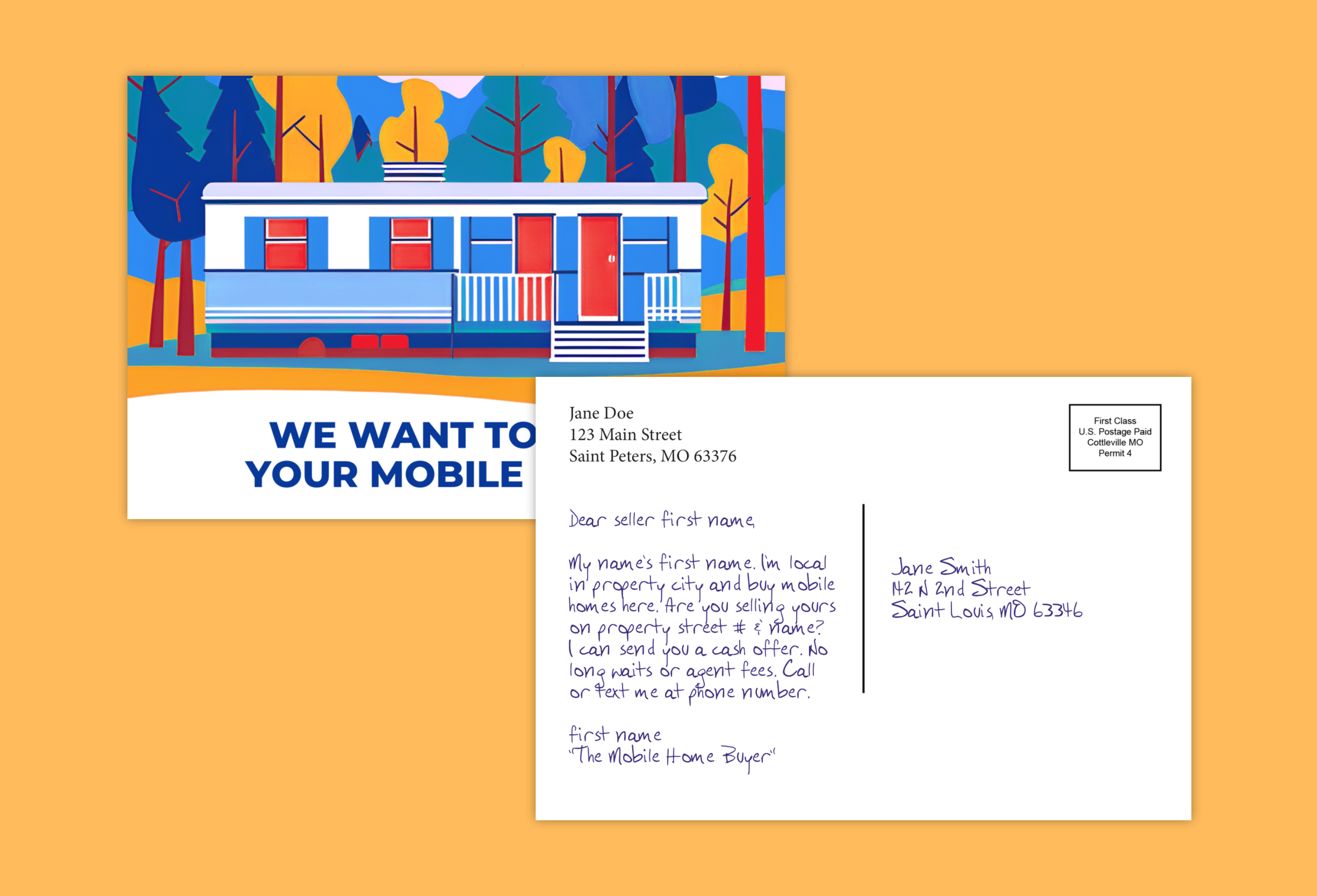
Quick messages
A great thing about postcards is that their limited space forces you to get straight to the point. The best-performing postcards usually:
- Lead with a bold headline
- Keep the message simple
- Make the next step obvious
If your message can’t be understood in a few seconds, it’s not going to work on a postcard.
Driving Inbound calls
Postcards tend to generate more calls, especially early in a campaign.
Why? Because they create quick recognition and remove friction. The recipient doesn’t have to decide whether to open anything, they just react!
Letter Direct Mail Use Cases
If postcards win on speed, letters win on depth. They take more effort to engage with but that effort works in your favor! That’s why letters typically have a higher response rate than postcards.

Converting Higher-Intent Leads
When someone is already dealing with a situation like a problem property or a life transition they’re far more likely to slow down and read. That’s where letters work their magic.
They give you the space to:
- Speak directly to the situation
- Show understanding
- Offer a clear solution
These leads don’t just need to know you exist, they need to trust you!
Building Trust and Credibility
A letter feels more personal and deliberate. It’s more like real communication which makes it easier to tell your story, explain how your process works, and set yourself apart from competitors. And in a crowded market, that extra depth can make all the difference.
Handling Complexity and Emotion
Some situations can’t be solved with a headline. Sometimes you need the room to get the message right, especially if your message involves:
- Reassurance (“no fees,” “no repairs needed”)
- Sensitive circumstances
- Multiple steps or explanations
Driving Stronger, More Qualified Calls
While postcards generate more calls, letters tend to generate better calls.
People who take the time to open and read a letter are more invested. They’ve already spent time with your message, which often leads to:
- Higher-quality conversations
- More serious sellers
- Better conversion rates
Example Use Case:
The goal isn’t to choose between postcards and letters. It’s to use each one at the right moment in your marketing. That’s how you move from inconsistent results to a system that consistently produces leads.
If you want to build that system→
We’re here to help
