How One Investor Used Lien Lists to Generate a $65K Deal

Scot P. is a real estate investor operating in the highly competitive Atlanta market, where finding profitable deals often comes down to strategy, not just effort.
Like many experienced investors, Scot focuses on identifying opportunities others overlook and building marketing systems that consistently surface motivated sellers.
The Challenge: Standing Out in a Competitive Market
Atlanta is one of the most active real estate markets in the Southeast. That means:
- More investors competing for the same deals
- Sellers receiving multiple offers
- Margins getting squeezed
Most investors rely on broad lists like absentee owners and pe-foreclosures.
The problem? Everyone else is mailing those same lists, too.
Scot needed a way to:
- Reach motivated sellers before the competition
- Avoid crowded marketing channels
- Keep acquisition costs low enough to protect his margins
The Strategy: Targeting Liens to Find Hidden Motivation
Instead of competing on saturated lists, Scot used a niche list strategy - targeting properties with liens, including tax liens and HOA liens.
This approach gave him several advantages:
- Built-in motivation: Liens create financial pressure, increasing the likelihood a seller will consider an offer
- Less competition: Fewer investors target these lists
- More efficient spend: Smaller lists allow for consistent marketing without overspending
While lien lists can be smaller in some markets, Atlanta provided enough volume for Scot to use this as a primary strategy.
Want to target smarter lists? Check out our guide to knowing your buy box.
The Execution: Direct Mail That Drove the Seller Online
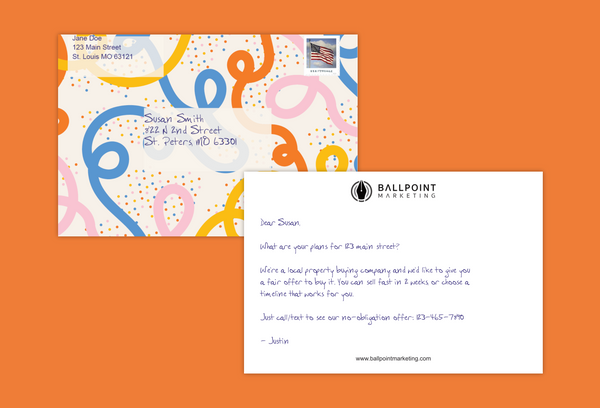
Scot mailed 3,000 pieces using a handwritten-style greeting letter - a direct mail format designed to look and feel personal rather than just marketing material. The key differentiator with this type of mailer is that it bypasses the "junk mail" filter most homeowners have developed.
Each letter included Scot's website URL, which is a small detail that made a big difference. The seller in this deal didn't call - she went to Scot's website (built on Carrot) and filled out the lead form. That meant Scot had her information, knew she was motivated, and could set an appointment immediately!
Here's what the campaign looked like:
- Mailing piece: Handwritten-style greeting letter
- List: Properties with liens (pulled from PropStream)
- Volume: 3,000 mailers
- Total mail cost: approximately $4,400
The Opportunity: A Distressed Property With Clear Motivation
The lead turned into a high-potential deal in the North Georgia suburbs.
The property had multiple distress signals:
- Back payments and HOA liens
- Hoarding conditions inside
- Mold damage
- Roof issues
- For the seller, the property had become overwhelming—financially and physically.
For Scot, it was exactly the kind of opportunity where a direct-to-seller approach created a win-win.
He quickly locked up the property after the initial appointment.
The Results: $65K Net Profit and a 1,447% Marketing ROI
Deal Breakdown:
- Exit Strategy: Fix and flip
- Purchase Price: $148,000
- Renovation Costs: $30,000
- After Repair Value (ARV): $270,000
- Net Profit: $65,000
Marketing Performance:
- Campaign Cost: ~$4,400
- ROI: 1,447%
On a $4,400 mail spend, Scot generated a $65,000 net return from a single deal. That's the kind of ROI that makes direct mail one of the highest-performing marketing channels in real estate investing - when you pair the right list with a mail piece that gets opened and read.
Ready to run a direct mail campaign that actually generates deals?
Schedule a free strategy call with our team!